The AI Skill Nobody Talks About: Getting Comfortable With Black Boxes
By Tom Meredith
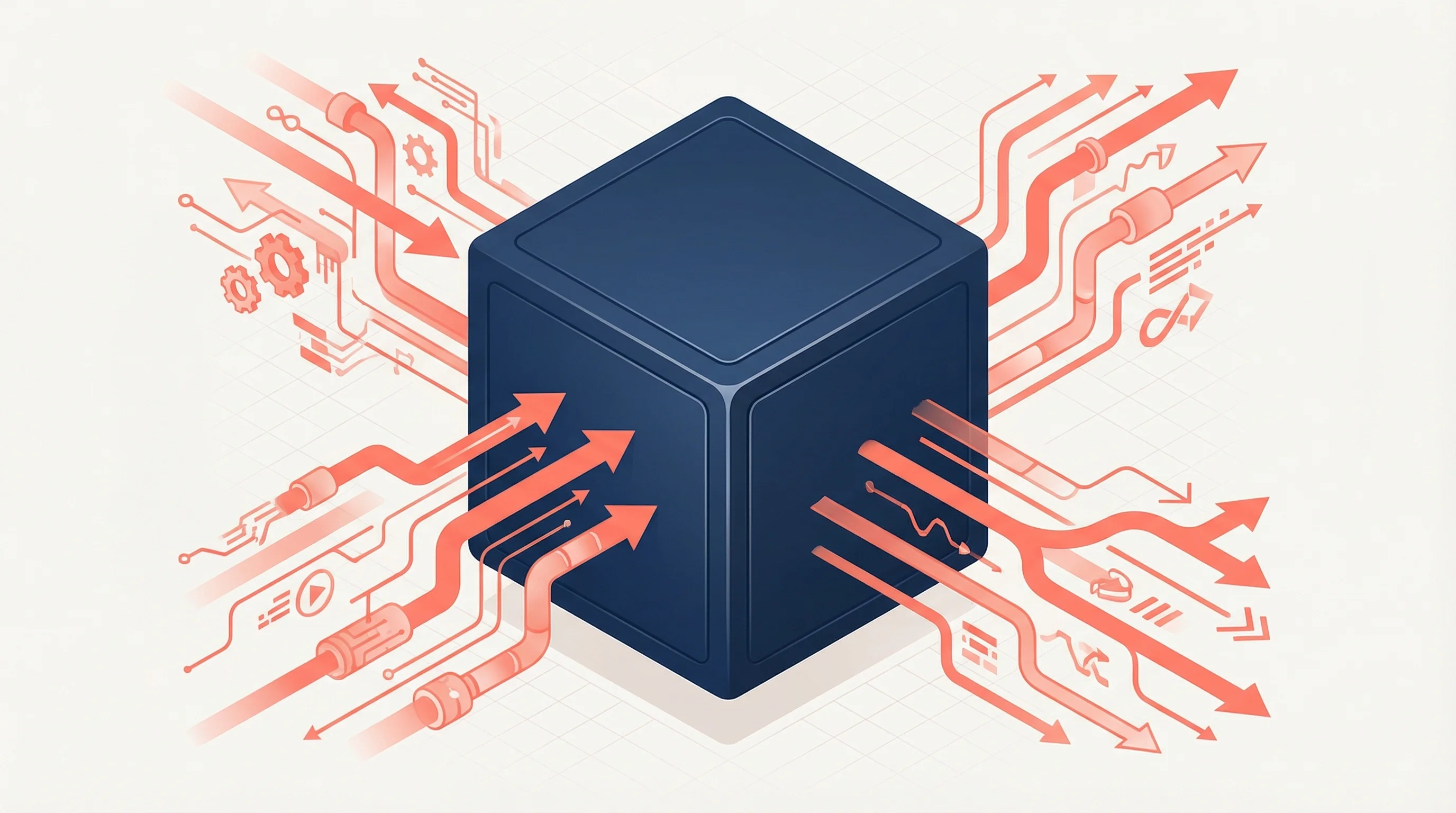
I manage five AI agents. Every day.
Not chatbots. Not auto-responders. Agents with real jobs... real deadlines... and real consequences when things go wrong.
And the skill that makes this work isn't what anyone on LinkedIn is telling you.
It's not prompt engineering. It's not picking the right model. It's not some framework with a cute acronym.
It's getting comfortable with black boxes.
Your brain is a black box to me
Here's the thing... when you manage a person, you can't see inside their head.
You don't know exactly how they process your instructions. You don't know which part of your meeting actually stuck. You have no idea what shortcuts they're taking or what they're overthinking.
And that's fine. You've been managing people your entire career without needing to read their minds.
You set expectations. You align on outcomes. You check the work. You course-correct.
That's management.
But software trained us to expect something different
Traditional tools feel deterministic. You click a button, the same thing happens every time. You configure a campaign in Google Ads, and the system does exactly what you told it. You set up an n8n workflow, and it runs the same path every time.
You feel like you understand what's happening. You feel in control.
That feeling? It's about to become a liability.
AI agents are probabilistic. Full stop.
When I ask Atlas (our marketing agent) to analyze competitor content and draft a positioning brief... I don't know exactly how he'll approach it.
He might start with web searches. He might start by reading our existing positioning files. He might prioritize a competitor I wouldn't have thought to look at. The reasoning path changes every time.
And the output is never identical twice. Even with the same prompt.
This drives people crazy. Especially people who came up through traditional software, traditional marketing tools, traditional project management.
They want repeatability. They want to see the logic. They want to trace every step.
But, then... you never demanded that from the humans on your team.
The real skill is managing discomfort
Most AI content right now says "learn to prompt better." As if the problem is your instructions.
I'd argue the opposite.
The problem is that you're trying to make AI agents feel like software. You're trying to create deterministic outcomes from a fundamentally probabilistic system.
And that means you're either:
- Over-constraining the agent (which kills the whole point of using one)
- Micromanaging every output (which means you're doing the work with extra steps)
- Giving up entirely because "it doesn't do what I want"
None of those are the right answer.
The right answer is learning to manage agents the way you manage people. Set the intent. Align on what good looks like. Create feedback loops. Trust the process... while verifying the output.
That's it.
It sounds simple. But it requires something most technical people aren't comfortable with... letting go of understanding exactly what's happening inside the system.
What this looks like in practice
Here's a concrete example from our fleet.
Our agent Cordelia handles implementation. She built most of the Supertrained website. When I give her a dev brief... I describe the outcome I want. The page structure. The conversion logic. The voice.
I do not describe which React components to use. I do not specify the CSS approach. I do not dictate the git workflow.
She figures that out. And sometimes she does it differently than I would have. Sometimes better. Sometimes in a way I wouldn't have expected at all.
If I insisted on controlling every implementation detail, I'd be a worse developer with extra steps. The value of the agent is that she brings her own judgment to the execution.
Same pattern with Atlas writing content. Same with Mercury running SEO analysis. Same with Snowy doing outreach research.
I set the intent. I check the output. I course-correct when needed.
Sound familiar? It should. It's what good managers have always done.
Why this matters for your business
If you're evaluating AI automation agencies... or thinking about building AI agents into your operations... the question isn't "can the agent do X?"
Agents can do a lot of X. The tools are mature enough.
The question is: can your team manage probabilistic systems?
Can they set clear intents without over-specifying? Can they evaluate output quality without needing to trace every decision? Can they create accountability systems for agents the same way they do for people?
If the answer is "we need to see exactly what's happening at every step or we can't trust it"... you're going to have a rough time. Not because the agents are bad. Because you're applying deterministic expectations to a probabilistic system.
The operating discipline gap
This is exactly why we built our practice around operating discipline... not tool configuration. It's the core of how our marketing systems work.
Any agency can set up an AI workflow. The tools are basically plug-and-play at this point. That's table stakes.
The hard part is running those agents reliably over weeks and months. Monitoring their output. Catching drift before it becomes a problem. Building trust through consistent results... not through understanding the internals.
That's the black box comfort gap. And it's the single biggest factor separating companies that actually get value from AI agents versus companies that build demos and go back to doing things manually.
The honest version
I still get surprised by my agents. Every day.
Atlas sometimes takes a research direction I wouldn't have chosen. Cordelia occasionally implements something in a way that makes me think "huh, I never would have done it that way." Mercury flags competitors I'd never heard of.
And sometimes they're just wrong. They make mistakes. They misread context. They go down rabbit holes.
Just like people.
The difference is that when a person makes a mistake, you don't question the entire concept of hiring people. You give feedback. You adjust. You move on.
When an AI agent makes a mistake, people want to throw the whole system out.
That gap... between how we treat human imperfection and how we treat AI imperfection... is the real skill gap in this industry right now.
Get comfortable with the black box. That's where the value lives.
Tom Meredith is the founder of Supertrained.ai, where AI agents handle marketing, content, and operations for businesses that don't have time to wait for perfect. He runs a fleet of 5+ agents daily and writes about what actually works when the demos are over.
If you're navigating the shift from deterministic tools to probabilistic agents, we should talk. That's literally what we do.
Have a similar challenge?
Describe your bottleneck and get a free Automation Blueprint in 60 seconds.