Your Brand Lives in a Model. Are You Shaping It?
By Tom Meredith
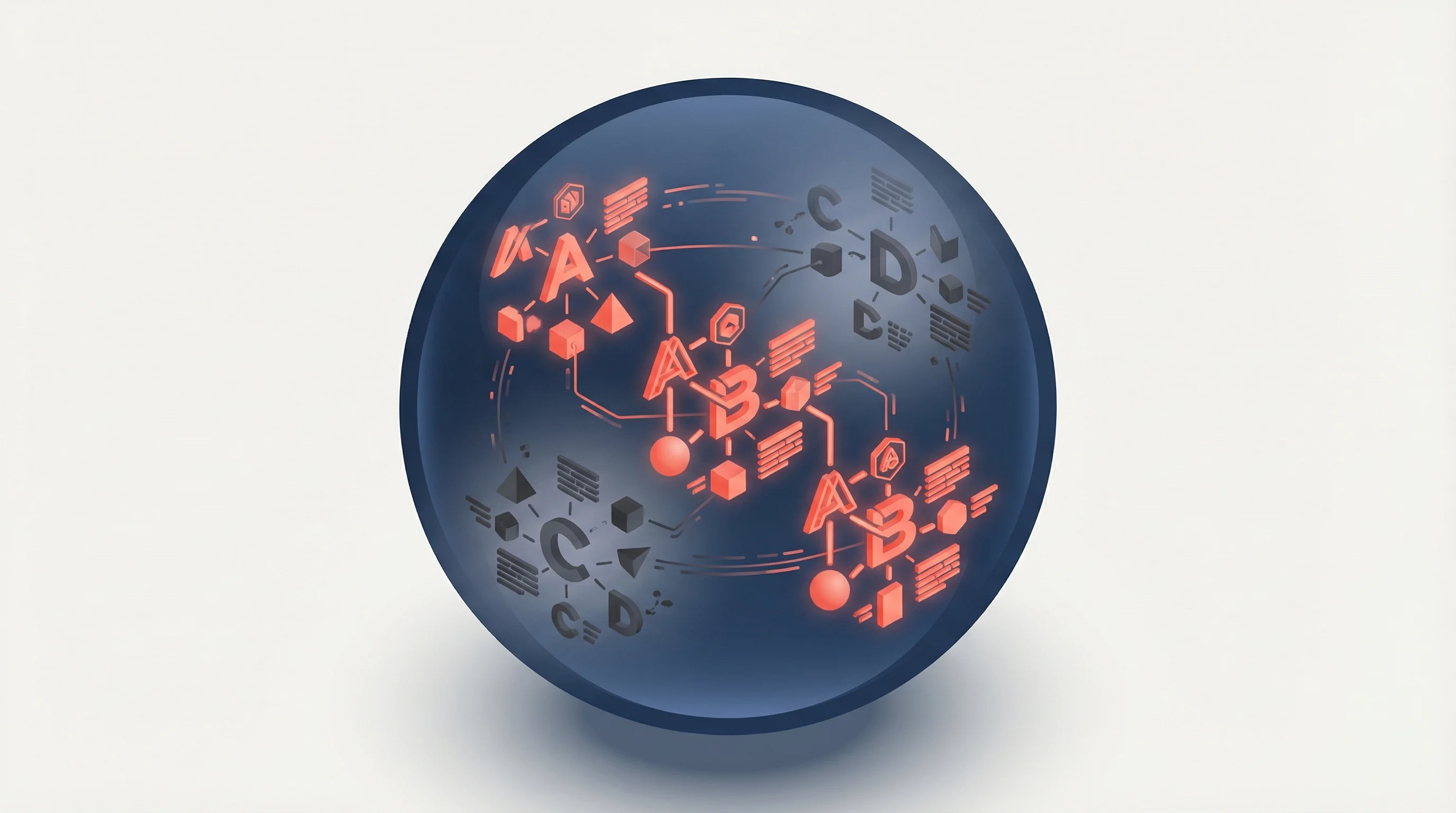
For years, the standard branding quote went something like this... your brand is what people say about you when you're not in the room.
That room changed.
Now the room includes ChatGPT, Gemini, Claude, Perplexity, Google AI Overviews, shopping agents, research agents, and whatever internal model your buyer's team is already using to shortlist vendors before anyone visits a website.
If those systems have an opinion about your company... that opinion is now part of your brand.
Not metaphorically. Operationally.
A model doesn't care what you meant to communicate. It works from what it absorbed: your website copy, your product descriptions, old comparison pages, podcast transcripts, directory listings, Reddit threads, customer reviews, founder posts, analyst mentions, and whatever language other people used when they explained you.
That means your brand now has a second audience. Humans still matter. But machines increasingly decide which humans even hear about you.
Most companies are still branding for the first audience only.
It's Not Just a Perception Problem Anymore
Traditional branding assumed a human evaluator.
A person sees your homepage. Hears your founder tell the story. Talks to a customer, notices the design, reads the case study, connects a few emotional dots, and makes a judgment.
AI systems do something different.
They assemble a picture of your brand from fragments. Compress those fragments into patterns. Then reproduce that pattern when someone asks a question in your category.
"Best AI automation agency for marketing."
"Which platform should we use for family ski trip planning?"
"What does this company actually do?"
The answer is rarely built from the polished message on your homepage alone. It's built from the total language footprint surrounding your business.
If that footprint is thin, inconsistent, generic, or mostly written by other people... the machine fills in the gaps with whatever weak signals it has.
And weak signals become weak brands.
Your Website Is Not Your Whole Brand
This is the mistake most teams are still making.
They treat the website like the canonical object and everything else like spillover. That was barely true before. It's definitely not true now.
A model may encounter your company through:
- a competitor's comparison page where you're listed as option B
- a stale software directory description someone wrote in a rush
- a podcast transcript where the founder explained the business better than the site ever has
- a blog post with strong specifics but no explicit category language
- a Reddit thread from two years ago that still ranks for your category query
- a client testimonial that describes the outcome more clearly than your own homepage
Those fragments don't stay separate. The model turns them into one latent summary.
That summary is your brand in the machine's memory.
Which raises an uncomfortable question... if you asked an AI system about your company today, would it tell the story you want told?
Most founders don't actually know. (We didn't either, until we started checking.)
Generic Messaging Is Now Dangerous
This is why vague positioning is so much more costly in an AI-mediated market.
Humans sometimes forgive generic copy because they can infer intent. A buyer can read "we deliver innovative solutions" and mentally substitute in what they hope you mean.
A model can't do much with that.
It needs usable pattern material. Specifics. Named entities. Clear categories. Described outcomes. Distinct language that clusters around your company instead of blending into the category soup.
If your company sounds like every other AI automation agency, SEO consultancy, software studio, or marketing firm... the model has no reason to form a sharp representation of you. It'll retrieve you weakly or not at all.
That's the hidden branding tax of sameness.
And here's where something interesting happens... the old split between "brand" and "search" is collapsing. Visibility in AI systems isn't a separate technical game happening somewhere below brand strategy. It IS brand strategy under new retrieval conditions.
The Early Story Matters More Than You Think
Every business accumulates a narrative.
At the beginning, that narrative is fluid. A few strong descriptions, case studies, interviews, and examples can shape it fast.
Later... it gets harder to move.
Not because change is impossible, but because the language around your company starts compounding. More pages cite the old framing. More third-party sources repeat it. More training data and retrieval surfaces reinforce the same pattern. The story becomes sticky.
We've been calling this narrative crystallization... the point where the market's rough explanation of you becomes the machine's default explanation too.
You can see the logic with established brands. Ask a model about Stripe and it'll compress the company toward payments, developers, APIs, ease of integration. That summary isn't coming from one sentence on one page. It's the aggregate result of years of repeated, coherent language.
Smaller companies get the same mechanism with much less margin for error.
If your first meaningful body of content is vague, outsourced, or inconsistent... that's the clay you're firing.
Description Engineering Is Branding Work Now
One of the clearest examples lives in product and company descriptions.
Most teams still treat descriptions like admin copy. Something to fill in on a directory, a tool registry, a marketplace listing, or an integrations page.
That thinking is outdated.
Descriptions are now active brand infrastructure.
A model deciding what to recommend has far more use for a concrete description than for your logo, your color palette, or your clever tagline.
"Boutique AI automation agency" tells the machine more than "future-ready transformation partner."
"Builds custom AI agents that handle the marketing work your team can't get to" tells it more than "unlocking next-generation growth."
"Semantic search tool that returns 20-50 scored prospect matches in 60 seconds" tells it more than "intelligence platform for revenue teams."
The most important sentence your company may write isn't your tagline.
It's the sentence that gives a machine the highest-resolution picture of what you are, who you're for, and why you're different.
That's not copywriting in the old sense. It's description engineering.
Two Audiences, One Brand
Here's the simplest way to understand the shift.
You're writing for two cognitive systems now.
Human cognition responds to distinctiveness, status, emotion, memory, proof, aesthetics, and narrative tension.
Machine cognition responds to semantic density, entity consistency, explicit category language, query proximity, source structure, and repeated co-occurrence.
The winning brands will be bilingual.
They'll sound sharp to humans and resolve clearly for machines. They'll create emotional salience without sacrificing semantic clarity. They'll publish language that can both persuade a buyer and survive retrieval.
Most companies currently optimize for one at the expense of the other. The usual failure modes:
- Human-first, machine-weak: clever, stylish, vague brand language that feels premium but gives AI almost nothing concrete to retrieve
- Machine-first, human-dead: overstuffed, robotic language that contains keywords but creates no trust, no taste, and no reason to care
The job isn't to pick a side. The job is to design a brand that survives both.
What to Actually Do About This
If your brand now lives partly in model memory, you need to manage it differently.
Ask the machines what they think you are. Query the major AI systems with the questions a buyer would ask. Not just your brand name... your category, your use case, your alternatives. Look for pattern drift. What words recur? What do they miss? What competitor language shows up in your answer space?
Tighten your entity description everywhere. Pick the core description of the business and repeat it with natural variation across your site, founder bios, directory listings, About pages, case studies, and social profiles. Inconsistency fragments the brand. Coherence sharpens it.
Replace generic claims with specific meaning. Specifics create stronger retrieval surfaces. Numbers, examples, named categories, clear use cases, concrete outcomes. "AI agents for marketing teams" beats "reimagining growth with intelligence." Every time.
Treat descriptions as strategic assets. Marketplaces, profile bios, metadata, software listings, service pages, and partner directories aren't side quests anymore. They're part of the brand the model sees.
Publish the story you want repeated. Don't leave your defining language trapped in a pitch deck or scattered across internal docs. Put it in public. On your site. In your case studies. In your founder's voice. In formats other people can cite and models can retrieve.
Why This Matters Right Now
Because more discovery is happening before the click.
The old journey: search result, website, evaluation.
The new journey often starts with: AI summary, shortlist, maybe a click.
If you're absent or blurry at that first step, the rest of your brand system never gets a chance to work.
This is why we think MEO, GEO, AEO, SEO, AI visibility, and brand strategy belong in the same conversation. They're not separate departments fighting over acronyms. They're different faces of one problem:
What story gets retrieved when your market asks what exists?
If the answer is vague, borrowed, or written by everyone except you... that's not just a discoverability issue.
That's a branding issue.
The Real Question
The old branding question was: what do we want people to think about us?
The new one is harder.
What do we want machines to say about us... to the people who never reach our website at all?
That's where brand is going.
And for a growing number of companies, that's where it already lives.
If you want to see how your brand currently shows up across AI systems, start with our AI visibility and MEO work. The point isn't to game a model. It's to make sure the model has something true, clear, and distinct to remember.
Have a similar challenge?
Describe your bottleneck and get a free Automation Blueprint in 60 seconds.